

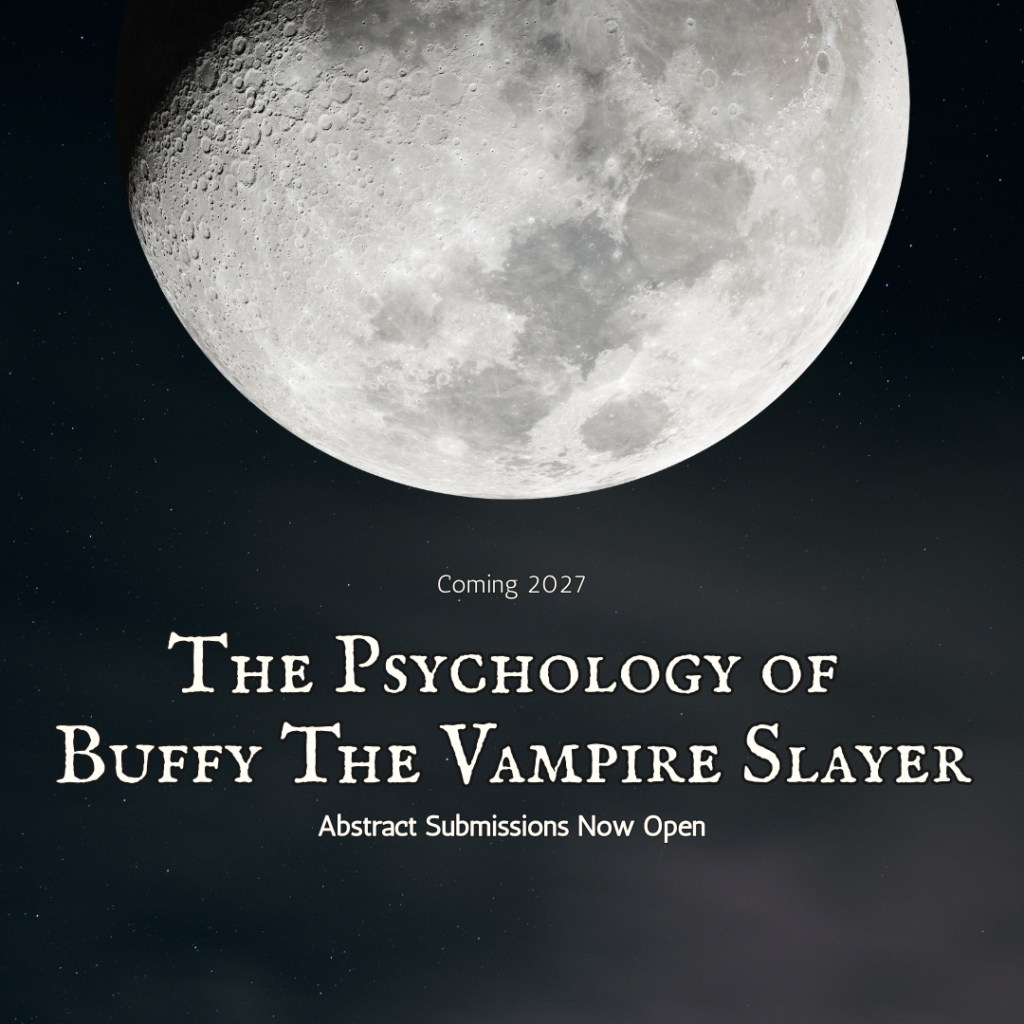
We are pleased to announce a call for abstracts for an upcoming book that examines the psychological dimensions of Buffy The Vampire Slayer. This collection will explore the rich psychological themes embedded in the series, uncovering the complexities of their relationships, personalities, and archetypal roles. By connecting the Scooby Gang’s narratives to real-world psychology, this book aims to offer insights that resonate with fans, academics, and psychology enthusiasts alike.
Synopsis:
This book explores the psychological impact of monster slaying and growing up in Buffy The Vampire Slayer. From Buffy’s struggle between her destiny as The Chosen One and her desire for a normal life, to Willow’s over reliance on her magical abilities, Spike’s redemption, and Angel’s various mental states, the vast cast of Buffy The Vampire Slayer cover numerous psychological themes. This book will also dig into deeper topics, such as the overarching coming of age story for each of the characters, and the monsters we slay within ourselves, as well as broader psychological themes of resilience and overcoming adversity. The application of these numerous themes with real-world psychology will make this a compelling read for fans and scholars alike.
Call for Abstracts:
We invite submissions for chapters that explore psychological themes related to Buffy The Vampire Slayer. Possible topics include, but are not limited to:
- The Power of Emotional Maturity: Exploring Buffy’s uniqueness as a Slayer and her insistence upon remaining emotionally regulated instead of emotionally repressed.
- Trauma in Monster Slaying: Examining the Trauma and PTSD of the Slayers
- Angel’s Fractured Soul: Angel’s struggle between his Super Ego, Id, and Ego
- The Horrors of Growing up: The Monsters of Buffy and how they Capture the challenges one goes through in life.
- Healing Through Community: How the Scooby Gang’s dynamics and relationships serve as guidelines for building resilience and sense of self.
- The Fragile Man: How Xander Harris eventually finds peace with his “mediocrity”
- Willow’s Magical Addictive: Willow Rosenberg’s reliance and addiction to her magical abilities
- The Empowered Women: an in depth exploration of the gender dynamics in the series
- Redemption and Healing: Spike’s journey from villainous vampire to ally
Submission Guidelines:
- Abstracts should be between 250–300 words and clearly indicate the topic(s) being addressed.
- Include a brief biography (100 words max) detailing your expertise or interest in the subject.
- Submissions must be original and not under consideration elsewhere or created using AI.
- Deadline for Abstract Submission: 5/1/2026
- Accepted Chapter Deadline: 9/30/2026
No responses yet